

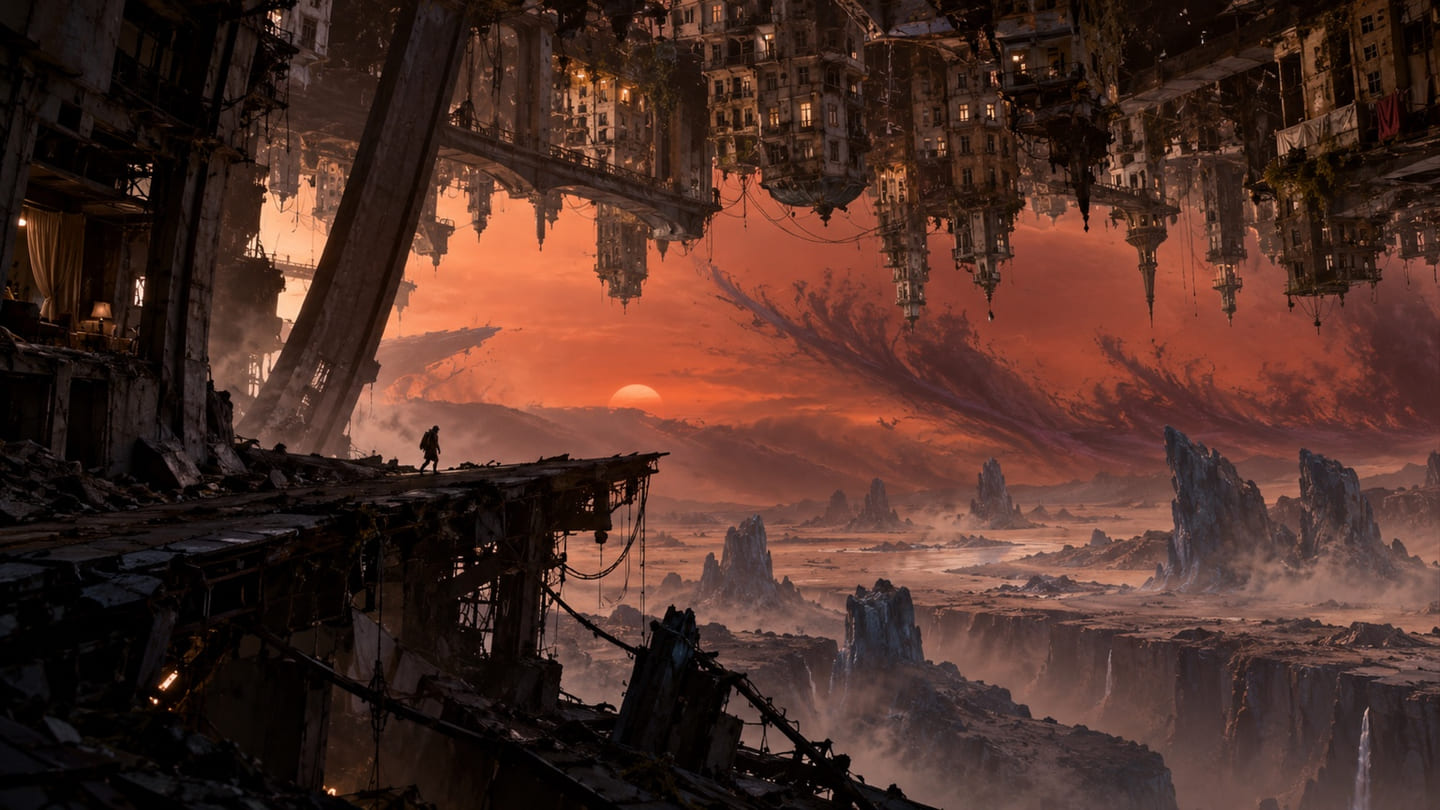
The worlds of Far From Humans
A universe almost gone Beneath a fading sky.
The stars are growing scarce. Worlds still hold their colours, their strangeness, and the lives within them.
Enter the universeFar From Humans takes place in the distant future. Cosmic expansion has isolated star systems and thinned the light. Heat has become a resource people count, share and control access to.
Illustrations and visual studies for Far From Humans. These images are not screenshots of the game.
At the dawn of the end of time
An accessible star is a reserve of heat, a landmark and a political stake. Light, heavy elements, reliable information or a usable route are worth more than a currency that gives access to nothing.
The end takes its time. Distances grow and trade becomes fragile. Each community has to count what it can still heat, repair or transmit.
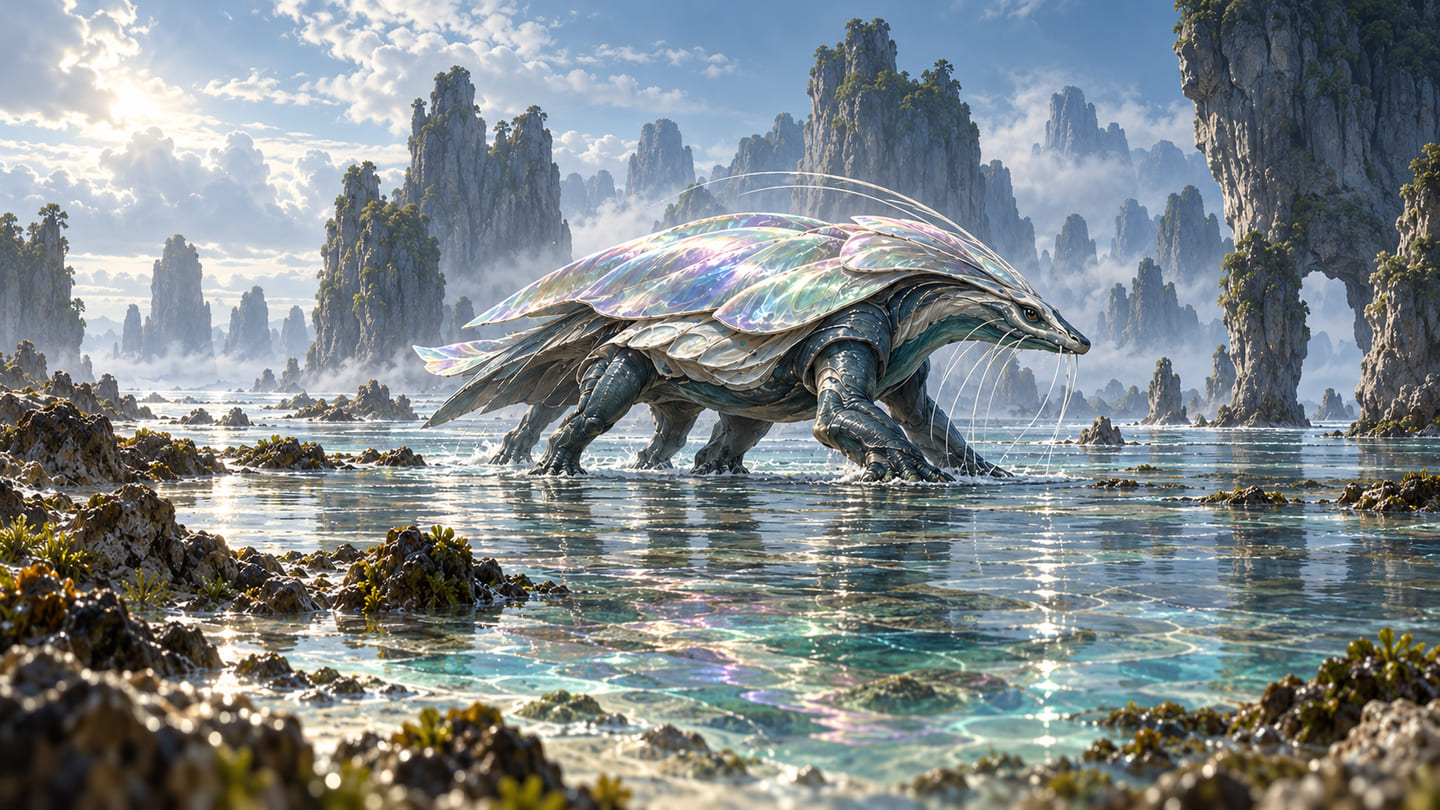
La Nacre Errante
A canopy of pearl.
Long filaments skim the shallows. With each step, its pearlescent canopy catches another colour.
Routes through tears
FTLA travel follows natural tears in spacetime. Beacons measure, synchronise and stabilise these possible passages. They depend on a seam that already exists.
Ships, messages and transactions follow the same seams. When one closes, the news stops passing too. A community can still be there, with no one hearing from it.
Worlds the end should have forbidden
Around FTLA anomalies, matter and climate sometimes hold onto unlikely states. Worlds remain colourful, ecosystems change and landscapes survive the cold around them.
These refuges come at a cost. An anomaly may protect one world by shifting its constraints onto another route or another population.
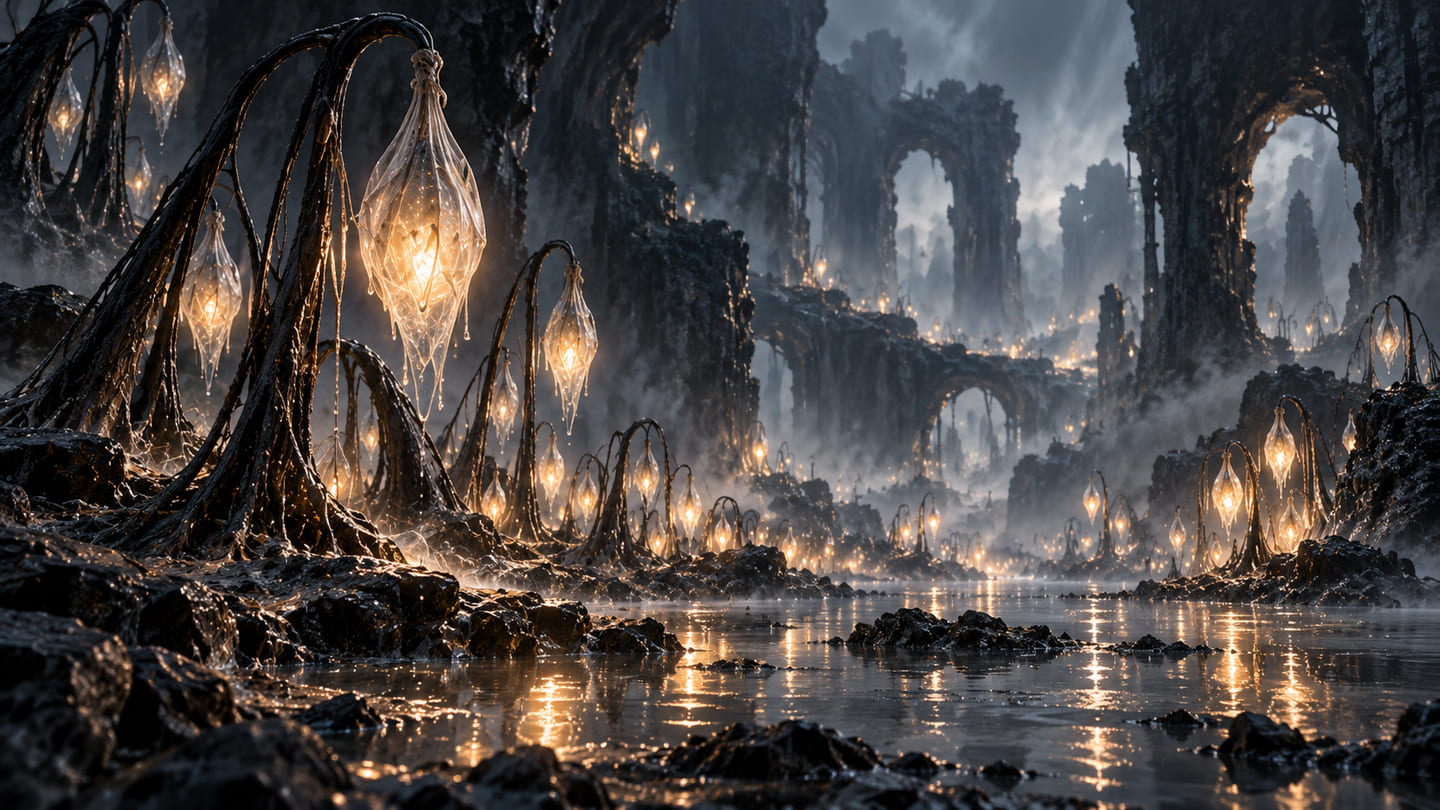
Les Lanternes Veuves
A few lights in the dark.
Thin membranes hold an amber glow. Around them, wet stone and dark water. Just enough light to feel a presence.
Living close to the heat
At Concession, heat shapes the city. A thermal Vein runs through an old structure that has become a port, market and shipyard. Incomplete collars, docks and great thermal curtains cling around it.
Near the Vein, heat is stable and power settles in. Towards the vacuum, thermal variations make themselves felt. The people there maintain what keeps them going. One station, very different daily lives.
The strange remains human
The strangeness of Far From Humans comes from humanity, its transformations, environments and technologies that outlived their original purpose. There is no encounter with an extraterrestrial intelligence.
Time alone has made humanity unrecognisable.
What people refuse to abandon
Under this fading sky, people still make repairs. They carry what others need and protect what they refuse to lose. Far From Humans follows their lives at that scale.
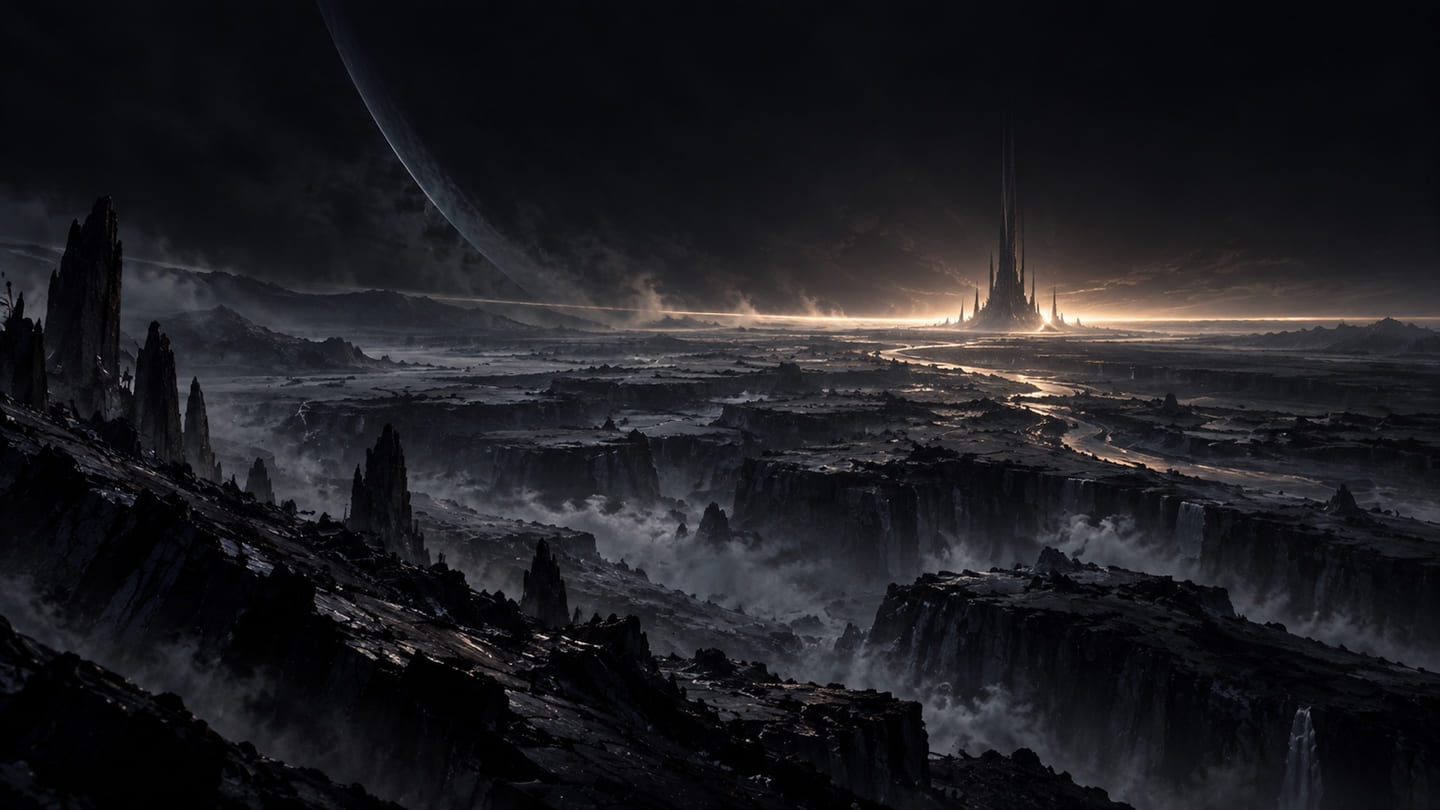
The routes
What still links the worlds.
When a route closes, the news stops coming too. At the other end, someone may still be waiting.